Access to Resources
Institutional Strengthening
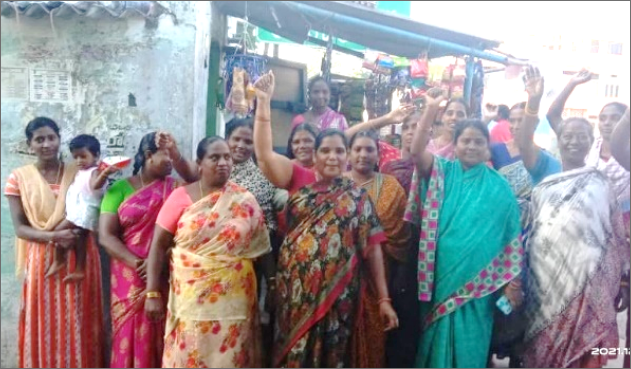
With a focus on making federations and collectives autonomous and sustainable, the alliance embarked on targeted capacity building initiatives where federation members were trained to set up systems and institutional mechanisms for better statutory compliances. As a result of these trainings, federation operations have streamlined with proper maintenance of documents including regular audits. The federation members having a renewed sense of ownership have started to rejuvenate defunct sanghas and form new sanghas including one for adolescent girls (kishoris) and boys (kishores) in certain constituencies.
Annual membership fee is being collected by the federation members regularly and deposited into Federation/CBO bank accounts. Issue based committees are activated and strengthened in areas of legal, crisis intervention, entitlements, governance, health and natural resources. The institutional strengthening interventions of the alliance has led to federation/ CBO members approaching various government departments like DLSA, TLSA, HRC etc.
Issue based committees were activated and strengthened. Federations were also capacitated to take forward the agenda of empowering adolescents. The institutional strengthening interventions of the Alliance has led to federation members interacting with government officials, from various departments. They have begun applying for different entitlements for their members.
Resilience Building
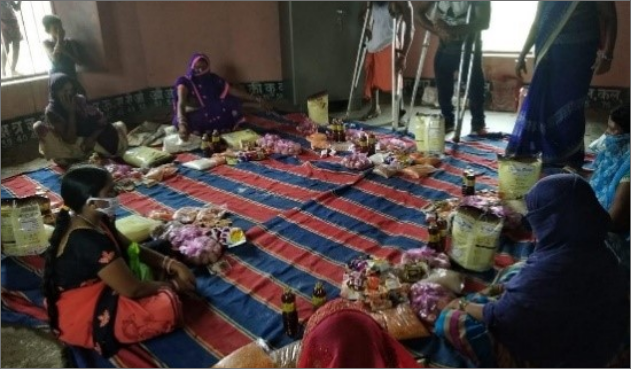
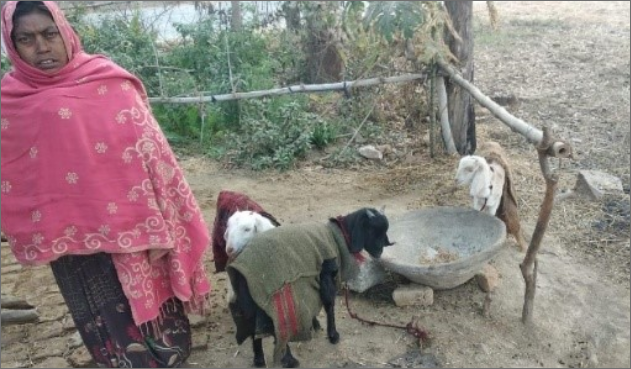
As a result of lockdown during the pandemic, it became imperative to address the varied issues that were arising like increased cases of GBV, job loss, food security, difficulties in accessing services and mental health issues which were otherwise not prioritised. Thus, the Alliance embarked on a Kitchen Garden, Sericulture farming and Collective farming resilience initiative post COVID-19 lockdowns to address food security and livelihoods. Entrepreneurial training on producing eco-friendly products, mushroom cultivation, goat rearing and training as par-veterinary were also initiated in this context. This has led to a strong demand for livelihood interventions.
Livelihoods
With a focus on urban female sex workers (FSWs), the Alliance obtained funding for projects in the South of India, aimed at creating a robust system for entrepreneurship and self-employment among socially and economically disadvantaged female sex workers (FSWs), modelled on proven and result-oriented processes. The interventions prepared FSWs to make the transition into alternate livelihoods and helped them access entitlements and ensure their credit worthiness. This was achieved by training FSWs to build businesses to diversify the sources of their incomes, while also having positive impact on the quality of their lives.
In a project for socio-economically disadvantaged trans persons in Karnataka, South India, the Alliance intervened to help them obtain sustainable incomes by establishing and running businesses based on market demand. The project enhanced trans persons’ self-esteem, dignity and livelihood options, in their preferred locations by facilitating: entrepreneurial skill building, obtaining credit and associated tasks like market survey and demand creation, while respecting their right to choose their occupation.
Women members from the collectives associated with the Alliance were trained to start their own businesses. The goal is that they will earn livelihoods and have increased access and control over their own resources.