Jyoti Mahila Samakhya (JMS), Muzaffarpur, Bihar
About the Member
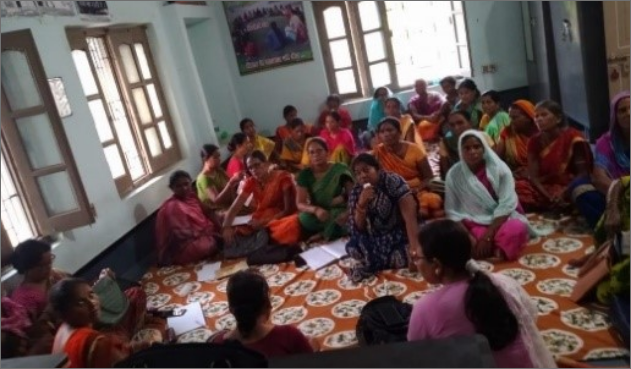
The Jyoti Mahila Samakhya (JMS) is based out at Khadi Bhandar Road, Near Nai Taleem School, Muzaffarpur and was Registered in 2003 under the Societies Act 1860. JMS was federated into a district level member-based organisation after a decade long extensive mobilisation of the rural poor and socially marginalised women especially belonging to Dalit and Muslim communities, into village level collectives. Mobilisation of grassroots women around issues of gender-based violence, lack of access to rights and entitlements and basic services such as primary health care and education was the key objective of the Mahila Samkahya programme.
The JMS was envisioned as a member-based platform to amplify issues and interests of the grassroots women as it was difficult for individual Sangha-s to make their voice heard beyond their own villages. The economies of scale were also one of the biggest concerns for the Sangha-s to come together at the district level as the need for knowledge building, training, networking and resource mobilisation could not have been done individually by the Sangha-s. Another concern that motivated the member Sangha-s was to provide their members a sense of solidarity, by being part of a larger group with membership from five blocks, all with very low literacy levels among women and girls.
Governance Structure: The JMS is a membership-based organisation with village level Sangha-s as primaries. It has a two-tier governance structures, Sanghas at the village level and a General Body at the district level. There is a process of electing the General Body every 5 years in which all the member Sanghas participate through their nominees. Each Sangha nominates one representative to elect 52 members for the General Body, one for each Gram Panchayat covered by the JMS across five Blocks. The members of the General Body select a 14-member executive committee, which includes three office bearers. A transparent process is followed at each step. Generally, the General Body, executive committee and office bearers are elected unopposed. Thus, a bottom-up system of governance has been followed by the JMS. The General Body meets twice in a financial year, and has the power to recall or veto any decision taken by the executive committee.
Target Group: Muzaffarpur is one of the most under developed districts in Bihar, as per Niti Ayogs’ ranking, a Government of India think tank on policies and programmes. The performance of the district on some of the crucial indicators such as health, education, financial inclusion has remained stagnated for decades. Similarly, with over 38% share of the scheduled castes and Muslims in the overall population (2011 Census) the district makes itself a perfect case for focused interventions.
The five blocks where JMS has its operations (Mushari, Orai, Gai Ghat, Kurhani and Bochaha), are those with high concentration of socio economically marginalised communities who are Schedule Castes and Muslim. Over 40% of the membership in women’s collectives and adolescent groups belongs to Schedule Castes and Muslims. The remaining membership comes from backward castes. The proportion of women from upper caste is negligible, less than 2%. Another category of women and girls who are actively identified and included in the village level Mahila Sanghas and Kishori Manchs are single, aged, deserted, divorcee, widow and survivors of gender-based violence particularly domestic violence.
Local Contact
Address: Jyoti Mahila Samakhya, Beside Nai Talim School, Masjid Chowk, Khadi Bhandar, Muzaffarpur- 842001
Primary Contact:
Saraswati, President: +91-8873457338
Secondary Contact:
Sita, Secretary: +91- 7294084780
Key Activities
Empowering adolescent girls
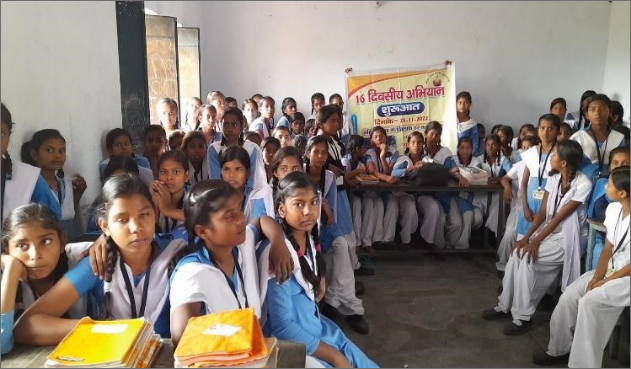
Increasing and newer forms of violence against girls emerged as a serious concern for the federation and its membership especially post Nirbhaya case. Thus, 2013 was a turning point for the federation in expanding its frontiers of intervention. A battery of new laws and amendments in the existing laws were introduced by the government to make retributive justice much faster and more effective. Several changes were introduced in the rape laws, redefining scope of sexual assault on women and girls, enactment of POCSO, etc. Country wide discourses on newer forms of violence against girls resulted into a conscious decision to actively engage with girls in building their understanding on gender, patriarchy and violence, and life skills. Creating safe platforms for adolescent girls for solidarity building, mutual learning, and collectively resist family, community decisions that are informed of patriarchal notions. In a state like Bihar which ranks among the worst performing state in child sex ratio, early marriage, and dowry deaths, cruelty by husband or his family members such interventions by the federation are seen as a continuum to their work with the adult women. Currently, JMS has formed 39 adolescent groups with a total membership of 951 girls. The groups are anchored by trained mobilisers who facilitate the fortnightly meetings. Below is a picture of a typical meeting of a Kishori Manch facilitated by a mobiliser.
Livelihood support to members
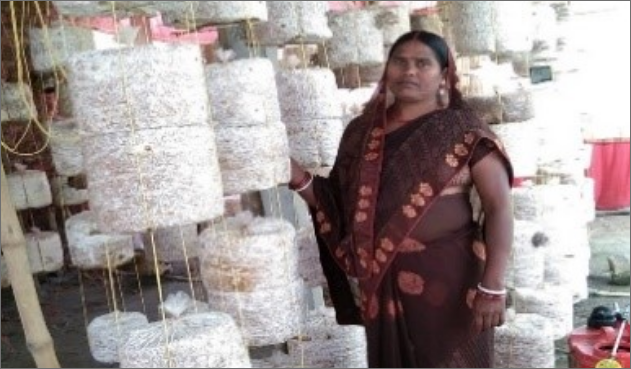
JMS runs a small saving and credit programme called APANA Bank (My Money My Bank) which caters to the credit needs of its members. The total fund which has been given as loans is close to INR 3.5 million. Members wanting to start small income generating activities are eligible for loans. The federation supports its member-farmers and producers, in setting up their own Farmer Producer Organisations (FPOs). The JMS members have formed two FPOs which are at its nascent stage.
Strengthening and supporting member Sanghas on issues of GBV and rights & entitlements
JMS is an apex body of village level collectives of women from socio-economically marginalised communities, and draws its mandate from the member Sanghas. The member Sanghas who collectively decided to come together at a bigger platform for lending support to each other in amplifying their concerns and voices. Mandated by the member Sanghas the role of the federation is to ensure that the issues of members are addressed and brought to the notice of the concerned stakeholders such as block and district level functionaries. The federation plays twin role, i) continuously building knowledge and capacities of the Sanghas so that they are able to solve issues at the local level through collective representation, ii) represent the voices of its membership at various platforms for building an enabling eco system for women girls to live a life with dignity. Networking with women’s Helpline, local police stations, DLSA, and block and district level officials is an important responsibility of the federation. Currently, the JMS works with 300 Sanghas across 52 panchayats in five blocks.
Success Stories
- All Post
- Back
- Kaimur
- Gaya
- Muzaffarpur
- Rohtas
- Champaran
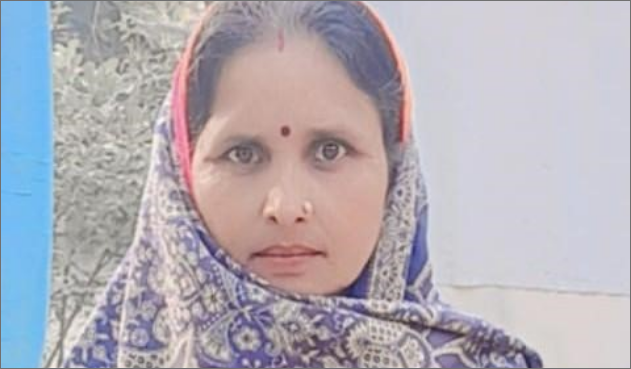
Saraswati, is a Dalit woman who is in her late 40s, was married off when she was only 12 years…